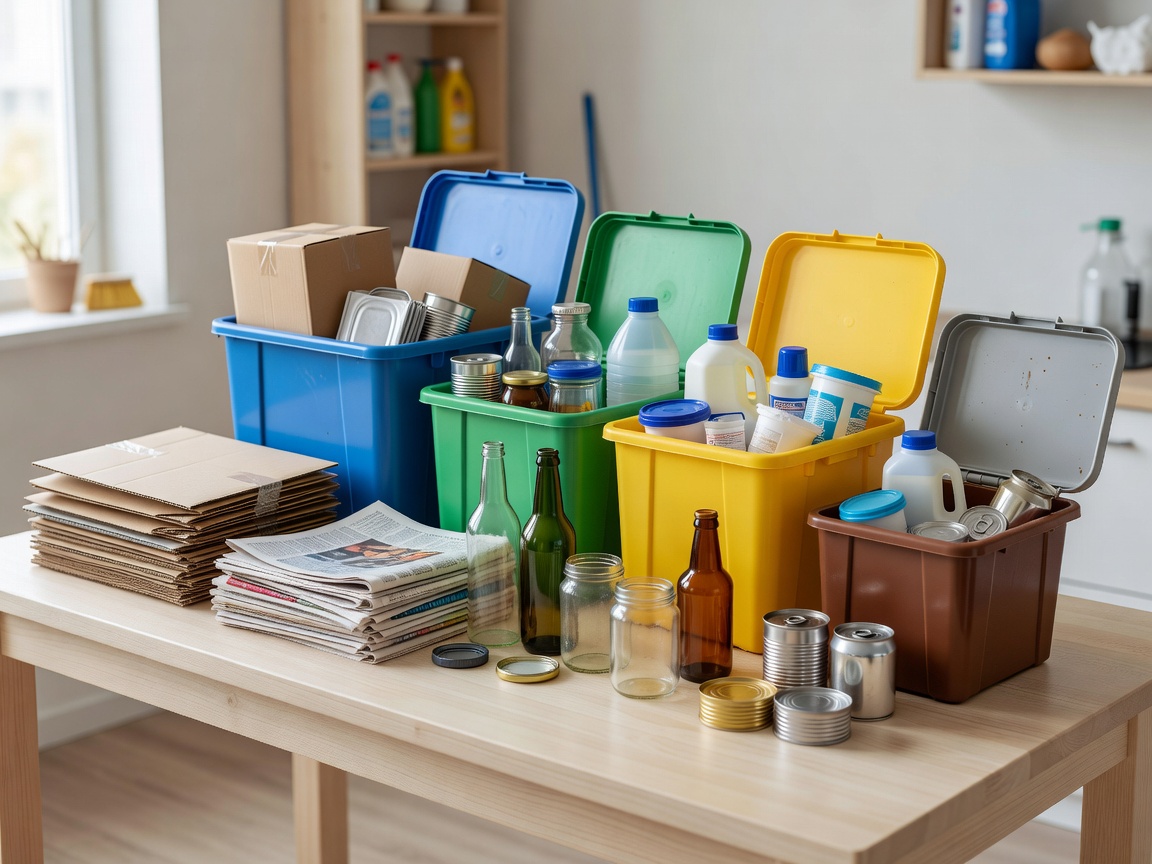
Local instructions come first
Recycling depends on collection contracts, sorting equipment, markets, and local policy. A material accepted at one address may be rejected a short distance away. Rules can change, and apartment buildings may use a different service from nearby homes. Check the current guide for your collection address, including any instructions about containers, collection days, and preparation.
A recycling logo or material name is not proof that an item belongs in a household bin. The item may combine materials that are difficult to separate, be too small for sorting equipment, or need a special drop-off route. If a local guide lists only certain packaging forms, follow that description rather than guessing from appearance.
A simple sorting routine
First identify the item and its parts. Separate components only when local instructions ask you to. Check whether food or liquid must be removed and whether rinsing is requested. Avoid spending excessive water on an item if your local service does not require it. Keep materials loose or bagged only as directed; bags can affect sorting in some systems.
When you cannot confirm an item is accepted, do not put it into recycling simply because it looks recyclable. Contamination can make sorting harder. Check the provider’s online search tool, printed guide, or customer service. For a one-off uncertain item, keeping it aside until you can verify the route may be better than making an unsupported guess.
Common categories to check
Handle special or risky items carefully
Paint, chemicals, oils, sharps, medicines, fluorescent lamps, and batteries can require special handling. Keep products in their original containers when safe, do not combine unknown substances, and follow local hazardous-waste instructions. If a package leaks or presents an immediate risk, contact the appropriate local service rather than placing it loose in a bin.
Reusable drop-off points and take-back schemes may accept selected items, but their conditions and availability vary. Check the operator’s current rules before travelling. A service may accept only specific brands, sizes, or materials, and may not be available everywhere.
Save your waste provider’s official sorting page or collection guide. Recheck it when services change or when an unusual item needs a route.
What if the answer is unclear?
Look up the item by name in an official local guide, and include its material and format in your search. Ask the provider if the guidance does not cover it. This guide offers general information only and cannot determine what a specific municipality or facility accepts. A cautious, verified decision is more useful than a confident guess.